The Who Owns What (WOW) project strives to create an easily accessible online resource that informs people about the institutional and political-economic structure of the American media industry. More specifically, WOW hopes to create a visual index interface and series of infographics available to anyone that indicates which smaller media companies are owned by which industry superpowers. The project’s ultimate goal is to call attention to the conglomerate status of the elite few corporations that dominate the media landscape in fields like Big Tech, news media, electronic goods, and the entertainment industry. Our focus on the make-up of the media industry stems from our interest in how its monopoly status affects culture, politics, and society. With only a handful of powerful corporations gatekeeping the information we receive, the cultural products we consume, and the technology we have access to, it’s important to understand how their structure and operation have created this inordinate measure of control.
WOW researchers believe that creating a big-picture representation of media ownership is crucial to understanding more specific, micro-level examples of big tech and mass media’s influence over culture, society, and politics in our ever-digitizing world. Some recent examples of media-related issues WOW hopes to put into perspective through research include October 2021’s hours-long Facebook server outage, Facebook’s subsequent rebranding as Meta, and the wide-scale, nationwide decline of local news in recent years. While these examples only scratch the surface of the kinds of issues that WOW hopes to contextualize, demonstrating why they relate to the project will give insight into the type of thinking and analysis that WOW aims to promote.
Facebook offers an important example of how big tech companies, including social media networks, enjoy a disproportionate amount of power in the absence of effective regulation. Facebook (now Meta) owns not only its eponymous social network, but its popular social media counterpart, Instagram, as well. It also owns the messaging app WhatsApp, which is especially popular in international contexts. Reportedly worth $86 billion as of 2020, Facebook and its subsidiary Instagram are used by more than half of American small businesses for digital marketing purposes. In this way, Facebook is often conceptualized as an all-access public space or platform on which a huge number of smaller businesses rely to make a profit. In reality, Facebook is not a freely accessible public resource but a for-profit business primarily concerned with its own commercial status above all else.
On October 4, 2021, the six-hour Facebook server outage put Facebook’s integral role as a platform for small businesses under scrutiny. The October outage was notable for a number of reasons. First, it represented one of the longest service outages in recent years for the company because it required a more complex, time-consuming rebooting process than usually necessary. Second, it occurred in the midst of an ongoing legal battle between Facebook and the Federal Trade Commision (FTC) that alleges the company used “anti-competitive acquisitions” of its subsidiaries to gain the commercial power it now possesses. Third, it stood as a stern reminder that despite its seemingly neutral facade as an ever-present platform for free communication and trade, Facebook is not part of the public infrastructure. It is a private company with hardly any transparency that has no material obligation to the billions of people who access it worldwide even as it functions as a critical economic tool. The roughly $100 million advertising revenue loss suffered by the social network during the outage is a drop in the bucket for a financial powerhouse such as Facebook. However, for the small businesses who depend on Facebook to facilitate commerce, a six-hour period offline can cause devastating effects with long-lasting consequences.
Less than a month after the 2021 outage, Facebook announced that it would be rebranding itself as Meta. According to CEO Mark Zuckerberg, the name change is an attempt to better capture the diverse array of services offered by Facebook-owned products. Meta— which translates to ‘beyond’ in Greek— ostensibly better represents not only what the company currently offers through platforms like Facebook and Instagram, but also what they plan to offer in the future. In a remote keynote address available on the Meta website, Zuckerberg describes the company’s vision of that future. Zuckerberg explains that “the next platform and medium will be even more subversive and embody an Internet where you’re in the experience, not just looking at it.” This super-virtual experience that transcends the traditional Internet— dubbed “the Metaverse”— supposedly allows users to do all the things they already do on social media, but better. Envisioned as “the successor to the mobile internet,” the Metaverse can more accurately be conceptualized as the future of social media made in Facebook’s own image.
During the video announcement, Zuckerberg made numerous veiled references to the yet unknown potential the Metaverse will afford its users. If the Metaverse goes “beyond” and even transcends the Internet as we know it, then surely our virtual counterparts in the Metaverse will likewise allow us to transcend ourselves— or so Facebook would like us to believe. In fact, Facebook’s launch of the Metaverse is first and foremost a business strategy: they are writing themselves into a history that has yet to be written. And they have the money and power to make it happen. With companies like Facebook controlling and creating new technologies in a process that manifests science fiction into reality, the consumers must ask themselves whose values and needs are actually being addressed through the development of new products.
While the previous two examples pertained to Facebook in particular, the media landscape that WOW studies goes far beyond a single social network. In the area of news media, the Washington Post recently reported that around 2,200 local newspapers have gone defunct across the US since 2005. This trend has led to the widespread emergence of local news deserts or communities with limited access to credible local news information.
The loss of local news coverage means vital information goes unreported, leaving local populations uninformed about even the most pressing of public issues. A local news source is a medium through which small communities can keep a finger on the pulse of local politics, community-related issues, and regional culture. In many ways, the loss of local news threatens democracy itself because the public no longer has a reliable, impartial way to stay informed about community matters.
The problem of news deserts cuts right to the heart of the media-related structural problems that the WOW project studies. Not only do the issues caused by news deserts fall under WOW’s radar, but the factors contributing to the decline of small-scale newspapers do as well. Through the lens of media criticism, news deserts can be understood more comprehensively as the outcome of both push and pull factors. For example, declining readership of locally circulated publications is often attributed to the rise of digital media and digital technology that allows people to access news immediately at home. Unable to compete against the financial might and social influence of monolithic, nationally-circulated papers, local newspapers close up shop for lack of resources. While locals in any given area might still subscribe to the Washington Post to learn about national issues, information about their own backyards is lost. Communities crumble when the people that compose them are disconnected from each other and when public concerns aren’t actually brought to the attention of the public.
The contemporary media landscape in the United States is a structurally complex, constantly changing, many-faced beast. The WOW project hopes to better equip the public with ways to understand and conceptualize the role the media industry plays in society, politics, and culture that recognizes macro- and micro-level instances of the influence it holds.
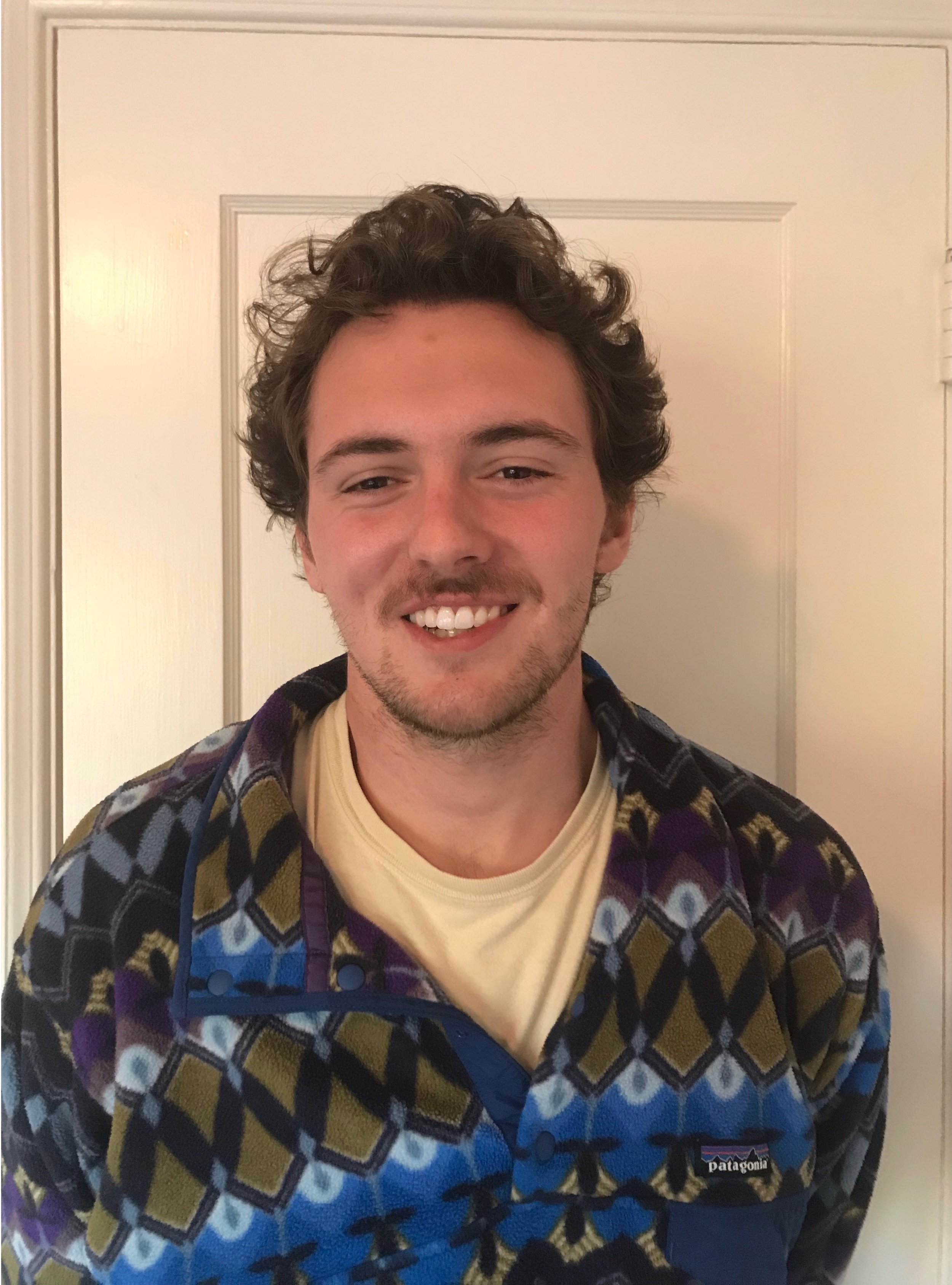
Andrew Hansen is a double major in Film and Media Studies and Writing & Literature at UCSB, with interests in media ownership, digital media, and archival research. He is currently working on Who Owns What (WOW).